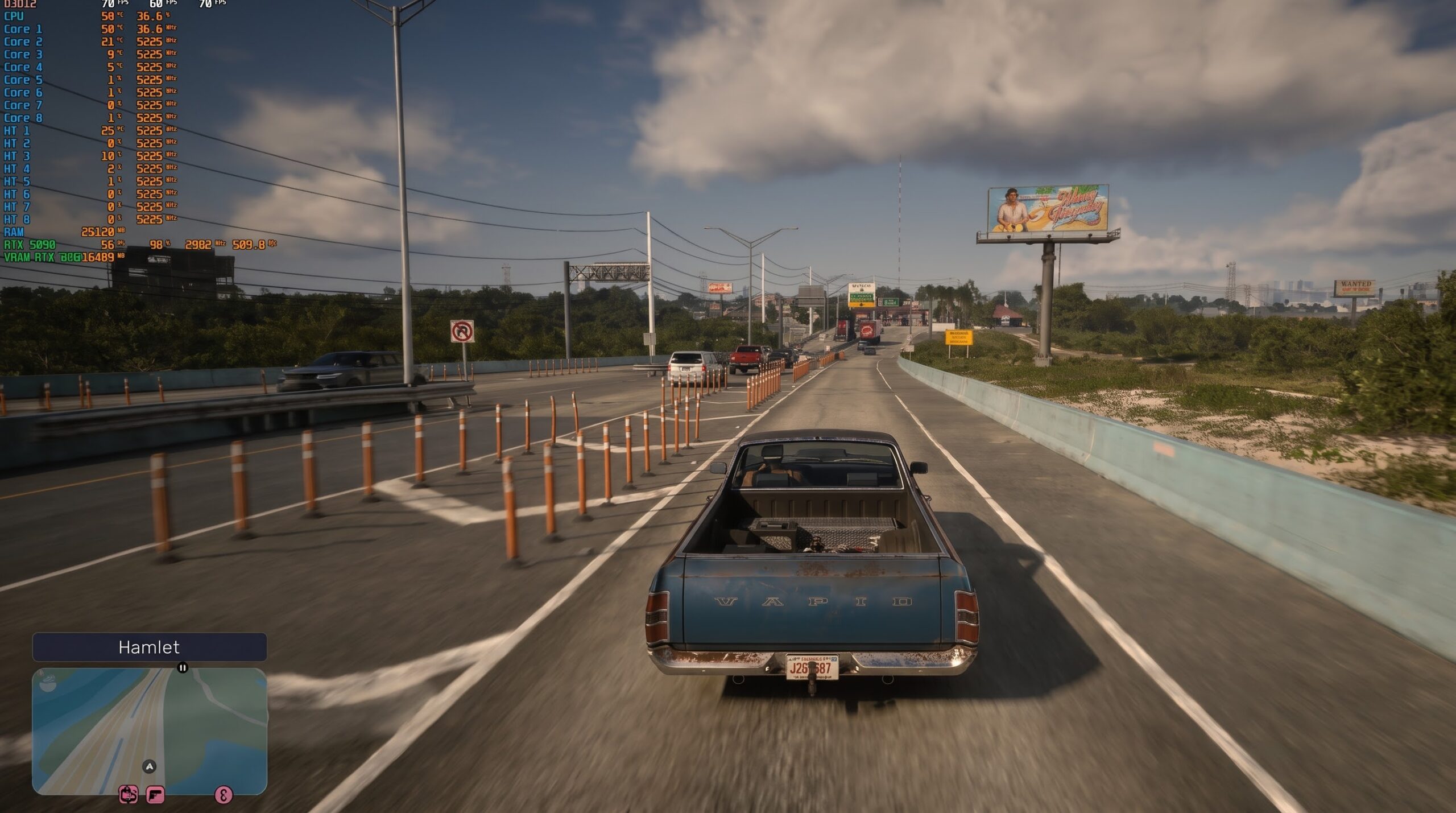
GTA 6 Early PC Port Rumors: The Leonida Project Stirs Up Hopes for a PC Release Ahead of Rockstar
The wait for Grand Theft Auto VI on PC has always been a bit of a nail-biter, and now there’s a new twist. Rockstar hasn’t announced a Windows version yet, but a fresh open-source project — Leonida — has started making waves in both gaming and tech circles. The goal here? To get the Xbox Series X version of GTA 6 running natively on Windows PCs, using a method called static recompilation.
Naturally, PC gamers who’ve been itching to explore Vice City and the bigger Leonida map without shelling out for a console are paying close attention. Suddenly, there’s chatter everywhere about whether someone outside of Rockstar could actually deliver a playable PC version before the official port sees the light of day.
Still, there’s something everyone needs to keep in mind: Leonida is just getting started. There’s no working GTA 6 PC build yet, and some crucial parts are still missing.
But it’s grabbing attention for a reason. The team behind Leonida has already made headway with tasks like extracting game resources, converting shaders, and processing assets. That’s enough to show that folks are serious about trying to adapt the console version for Windows.
So, what is Leonida actually aiming for? Is it really possible they could beat Rockstar at its own game? And what does all this mean for the buzzing rumors about a GTA 6 PC port coming early?
Let’s dig in.
GTA 6 PC Port Rumors: Heating Up
GTA 6 isn’t just another blockbuster release — it’s one of the biggest moments in gaming in years. Rockstar has a pattern: they always roll out Grand Theft Auto games on consoles first, making PC players watch from the sidelines (sometimes for months, sometimes longer).
History repeats itself. GTA 6 landed on PlayStation 5 and Xbox Series X|S on November 19, 2026. As for Windows? Rockstar’s lips are sealed.
That’s left the door wide open for hobbyists and indie developers who want to find their own way to run the console version on a PC.
Out of everything surfacing, Leonida stands out. Unlike mods that tweak or patch the game, Leonida shoots for something more technical — static recompilation. Basically, that means translating Xbox game code so it plays nice with Windows.
If they pull it off, Leonida could turn into an unofficial way to run GTA 6 on PC. But, let’s be real — right now, it’s just a set of promising blueprints, not a finished, playable port.
What’s Leonida All About?
At its core, Leonida is an open-source effort focused on bringing GTA 6’s Xbox Series X version to Windows using static recompilation.
(And yes, the project’s name comes from Leonida, the fictional state where GTA 6’s story unfolds.)
You’ll find the project on GitHub, created by someone going by ItsNotRexed. Their plan: make tools that convert the game’s console code and resources into forms that work on Windows.
This isn’t about old-school emulation, where the goal is to copy the original hardware and software environment. With static recompilation, you’re actually translating the compiled code from one system into another so it can run there directly.
That’s a big deal. Both Xbox Series X and modern Windows PCs use x86-64 processors, which gives the project a head-start. But just sharing chip DNA with Xbox doesn’t make everything automatically compatible — the OS, graphics, memory management, and a bunch of other platform quirks still need specific solutions.
That’s what the Leonida team is focused on.
And to be clear, Leonida doesn’t hand out Rockstar’s copyrighted game files. It’s only about the technical side — getting the console game code and resources working on Windows.
Static Recompilation: How Does It Work?
If you’re wondering why Leonida’s even got a shot, the answer’s in static recompilation.
Games are built for specific hardware and operating systems. Even if two machines run the same type of processor, everything else about how they handle software can be wildly different.
Take Xbox games: they talk to the Xbox OS and interact with its graphics cards through special interfaces. A PC has its own totally separate stack.
Static recompilation tries to bridge that divide, taking the game’s compiled instructions and turning them into something another platform can use.
In Leonida’s case, the dream is to rewrite enough of the Xbox game code so it’ll run on Windows instead.
But graphics are a world of headaches. The Xbox Series X uses AMD’s RDNA 2-based graphics. The project wants to translate those bundled graphics routines into SPIR-V — which works with Vulkan, a cross-platform graphics solution.
Vulkan is key, because it’s already widely supported on Windows. The idea here is to get the game’s console-centric graphics to play nice with PC graphics cards.
Of course, it’s not simple. Modern open-world games are monsters — rendering, AI, audio, physics, assets streaming, memory juggling. Everything’s stitched together. Managing to translate some shaders doesn’t mean the game’s even close to running.
Which is why Leonida still has a long, tough road ahead.
Early Milestones: What’s Working So Far?
Nobody can play GTA 6 through Leonida yet, but the team has already checked off some progress.
GameGPU first highlighted some early wins:
- Extracting and converting 26 shaders so far.
- Turning compiled graphics programs into SPIR-V format.
- Exporting about 503 3D models as OBJ files.
- Extracting textures to DDS files.
- Processing audio resources to Ogg Opus and WAV formats.
That’s more than just talking. There’s real technical work happening under the hood.
But keep your expectations in check. Getting assets out of the game is only one step. For a proper PC port, you need a working executable, more graphics compatibility, and a system to handle OS and hardware communications.
Until those pieces come together, don’t expect to boot up GTA 6 via Leonida.
So, Why Can’t Leonida Run GTA 6 Yet?
That’s what everyone wants to know. If asset extraction works, what’s the holdup?
Well, there’s still no executable that can make the game load and run. And graphics support isn’t ready. Big gaps remain, especially around Direct3D 12 (the main Windows graphics toolset) and Vulkan.
They’ve got to make sure the game’s translated code actually “talks” to the new graphics resources, too.
Picture a packed chunk of Vice City in-game. Buildings, cars, pedestrians, dynamic lights, weather effects, and world streaming — they all need to work together, on the fly, without tanking your frame rate.
Right now, Leonida can pull models and textures. That’s not the same as wrangling the city in real time.
For now, Leonida is an experimental project, not a shortcut to playing GTA 6 on your PC.
What Kind of PC Do You Need for Leonida?
Leonida’s documentation lays out some hefty requirements — but remember, these are for building and testing the project, not actually playing GTA 6 on PC. (We still don’t know the official PC specs for GTA 6 from Rockstar.)
Here’s what you’ll need to compile and experiment with Leonida:
- Windows 10 or 11, 64-bit.
- About 350GB of free space for files and assets.
- Python 3.12 or newer.
- .NET 8 SDK.
- Vulkan SDK.
- LLVM 21+ with AMD support.
- Visual Studio 2022 with C++ desktop packages.
- Windows SDK 10.0.26100 or above.
- FFmpeg for audio.
You’ll also need extra tools for checking shaders.
The big takeaway: Leonida isn’t a plug-and-play thing. You’ll need to roll up your sleeves, get comfortable with development tools, and get your hands on a suitable copy of the game.
Storage is another eye-opener. Open-world games like GTA 6 generate mountains of data, and the conversion process produces more—temp files, extracted stuff, converted resources.
Again, don’t confuse these development requirements with whatever hardware you’ll need for an official GTA 6 PC version down the line. Whenever Rockstar finally gets around to that, expect a completely different (and probably more forgiving) set of specs.

Digital content writer at EarningOnline.tech, covering government schemes, Games, finance, technology, online earning, and the latest news with a focus on accuracy and reader-friendly information.